
Exploring the Majesty of Morocco Historical Sites: A Journey Through Time
Table of Contents
Morocco is a land where the past is not merely remembered; it is lived. From the snow-capped Atlas Mountains to the golden dunes of the Sahara, the landscape is punctuated by architectural marvels that tell the story of North Africa. Travelers seeking morocco historical sites will find themselves immersed in a tapestry of civilizations, ranging from indigenous Berber heritage and Roman archaeology North Africa to the grand legacies of the Almoravid, Almohad, and Saadian dynasties.
The Spiritual Heart: Medina of Fez and Meknes
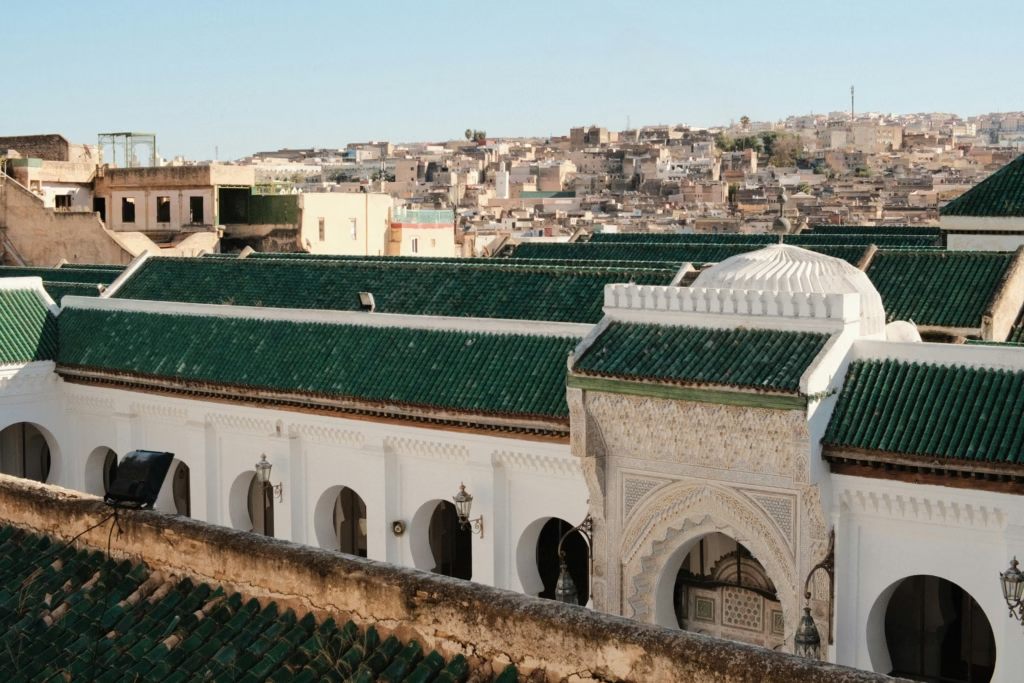
The Medina of Fez (Fes el-Bali) is perhaps the most complete medieval city in the Islamic world. As one of the premier UNESCO World Heritage Sites Morocco, it serves as a living museum of Islamic architecture. Navigating its car-free labyrinth, you encounter the Ben Youssef Madrasa—though located in Marrakesh, its spiritual cousin in Fez, the Al-Attarine Madrasa, showcases similar Moorish design with intricate zellij tilework and carved cedarwood.
A short journey away lies the Historic City of Meknes, the vision of Sultan Moulay Ismail. This imperial city is famous for its massive ramparts and the monumental Bab Mansour gate. Nearby, the sacred town of Moulay Idriss Zerhoun clings to the hillside, holding the tomb of the man who brought Islam to Morocco, marking it as a site of immense spiritual significance in the ancient Maghreb monuments record.
Roman Grandeur and Imperial Might
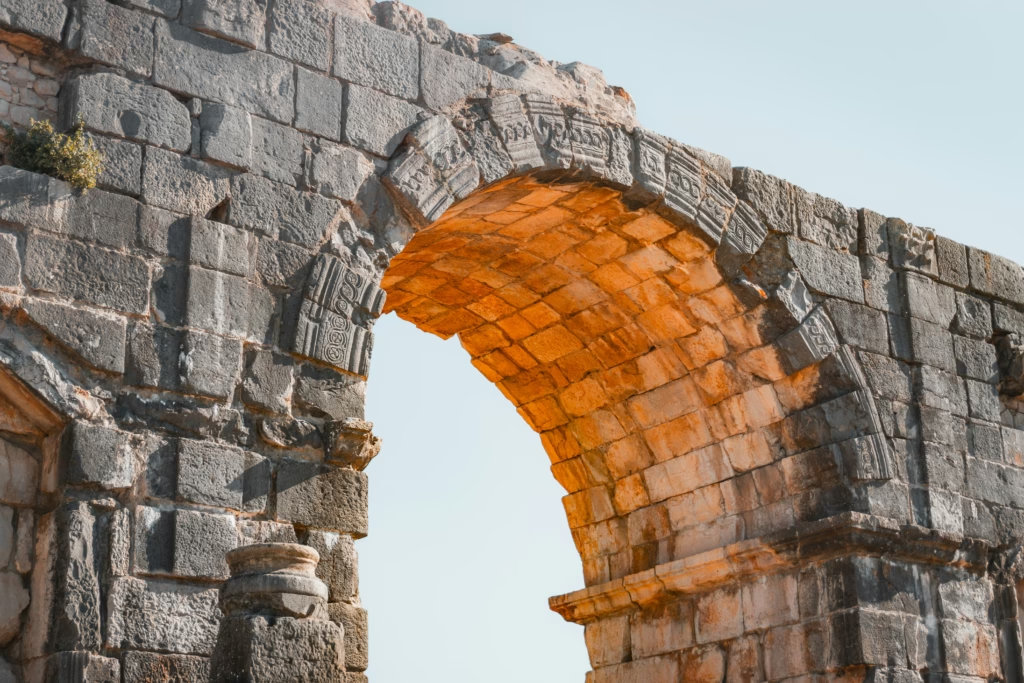
To understand the full scope of morocco monuments, one must visit the Volubilis Roman ruins. Located near Meknes, Volubilis was once a thriving provincial capital of the Roman Empire. Today, its exceptionally preserved floor mosaics and triumphal arches offer a glimpse into the colonial fringes of Rome.
The transition from Roman influence to Islamic rule is best seen in the Moroccan imperial cities. In Rabat, the capital, the Hassan Tower stands as a testament to the ambitions of the Almohad dynasty sites. This incomplete minaret, intended to be the largest in the world, faces the elegant Mausoleum of Mohammed V, a masterpiece of modern Moroccan craftsmanship that honors the nation’s path to independence.
Coastal Fortresses and Cultural Blends
- Kasbah of the Udayas (Rabat): A blue-and-white fortress overlooking the Atlantic, showcasing early Almohad military architecture.
- Medina of Essaouira: Formerly known as Mogador, this 18th-century fortified town reflects a unique mix of European military architecture and Maghrebi aesthetics.
- Portuguese City of Mazagan (El Jadida): A coastal bastion that highlights the Renaissance period of Andalusian influence Morocco.
The Red City: Medina of Marrakesh
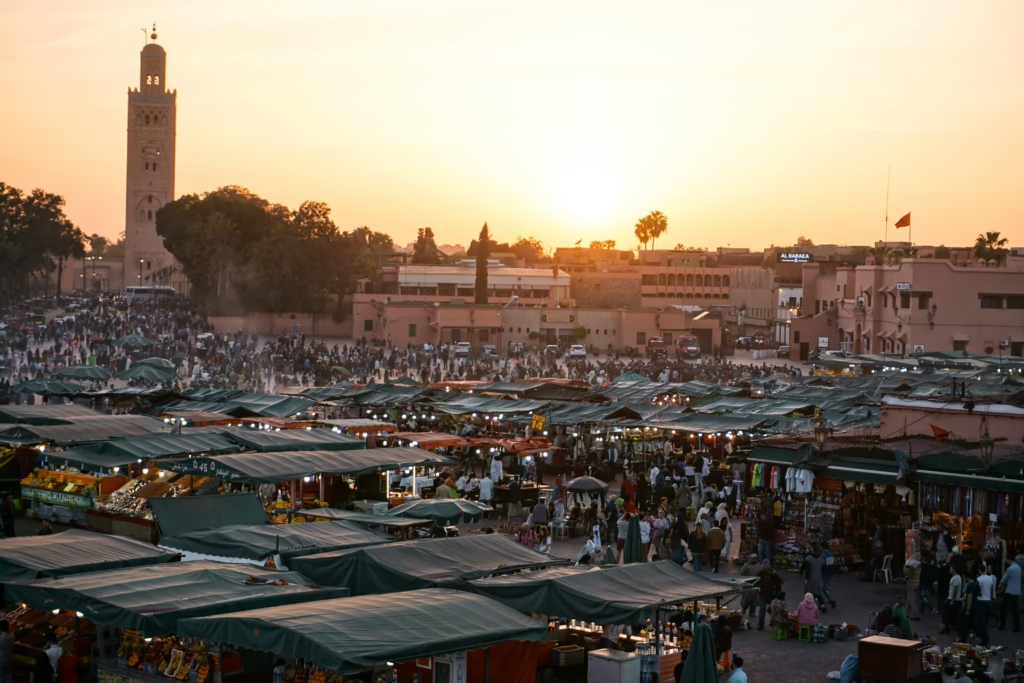
No exploration of morocco world heritage sites is complete without Marrakesh. The Medina of Marrakesh is centered around the vibrant Jemaa el-Fnaa square, but its historical weight lies in its palaces and mosques.
The Koutoubia Mosque, with its iconic minaret, served as the blueprint for the Giralda in Seville. Deep within the medina, the Saadian Tombs lay hidden for centuries, preserving the opulent Saadian architecture of a lost golden age. Nearby, the Bahia Palace and the evocative ruins of El Badi Palace demonstrate the transition from defensive Kasbahs and Ksars to luxurious urban residences.
The city also preserves its multicultural roots through the Jewish Mellah history, where the spice markets and synagogues tell a story of coexistence that has defined Morocco for generations.
Berber Strongholds and Southern Wonders
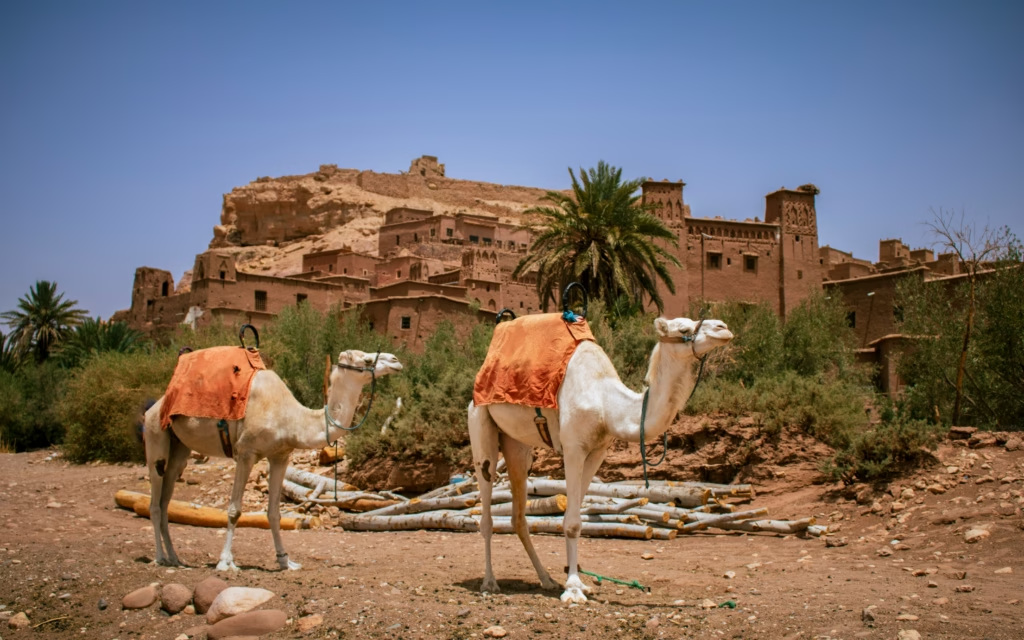
As you cross the Atlas Mountains, the architecture shifts. The Ksar of Ait Benhaddou is the crown jewel of the south. This reinforced village, made of earthen clay, is a striking example of Berber heritage and has served as a backdrop for countless films. These Kasbahs and Ksars were vital stops for trans-Saharan trade caravans.
Further into the mountains, the Tinmel Mosque stands as a lonely sentinel. It is one of the few mosques in Morocco open to non-Muslims and represents the birthplace of the Almohad movement.
Evolution of the Urban Landscape
Morocco’s history didn’t stop in the medieval era. The Medina of Tetouan offers a unique glimpse into the refinement brought by refugees fleeing the Spanish Reconquista, blending Moroccan culture with clear Andalusian influence.
In the 20th century, French Protectorate urban planning introduced the Ville Nouvelle (New City) concept in places like Casablanca and Rabat. However, the most striking modern monument remains the Hassan II Mosque in Casablanca. While not ancient, it utilizes traditional Moorish design on a gargantuan scale, featuring a retractable roof and a minaret that lasers toward Mecca.
| Site Name | Primary Significance | Location |
| Volubilis | Roman Archaeology | Near Meknes |
| Ait Benhaddou | Berber Earth Architecture | Ouarzazate |
| Chellah | Merenid Necropolis/Roman Port | Rabat |
| Medina of Fez | Medieval Urban Fabric | Fez |
Conclusion: A Legacy Carved in Stone and Clay
From the Rabat Chellah—where Roman ruins mingle with medieval Muslim tombs—to the vibrant streets of El Jadida, the sheer density of morocco historical sites is staggering. Whether you are marvelling at the Islamic architecture of a 14th-century madrasa or exploring the Roman archaeology North Africa has preserved at Volubilis, you are engaging with a heritage that is uniquely Moroccan.
The preservation of these sites ensures that the stories of the Almohads, the Saadians, and the Roman legions continue to resonate. Morocco is not just a destination; it is a journey through the layers of human civilization.